

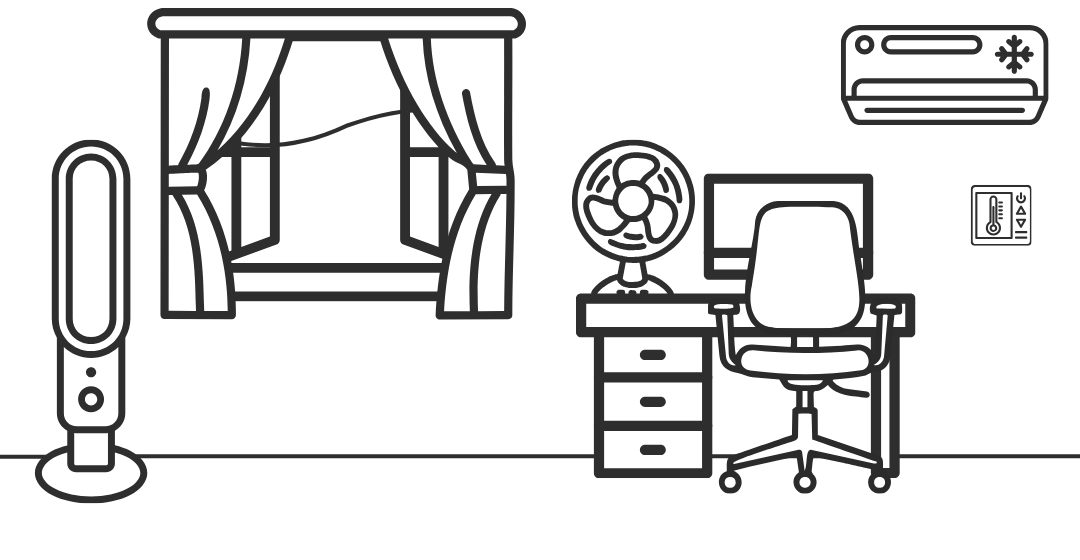
Keeping warm during colder months is vital for good health, but it is just as important to stay cool in hot weather. There are a number of things you can do to help keep your property cool in warmer temperatures, whether at home or at work, which can further reduce your reliance on energy-intensive appliances. HeatingSave doesn't just help with your heating — it can also control your air conditioning to provide energy savings throughout the hotter months as well.
Make sure you're not generating heat
The first and most obvious thing to do is to make sure your heating is turned off. However, you should also check that your hot water pipes are well-insulated, so they don't give off heat when you're using the hot water.
Electrical appliances give off heat as well — larger things such as fridges and freezers should be checked for energy-efficiency and correct working, to ensure they aren't wasting energy through heat loss and warming up your property as a consequence.
Traditional lightbulbs also warm up, so switching off lights will slightly reduce the temperature, although with more modern LEDs this is negligible.
Of course, cooking will generate significant amounts of heat, so if possible try to use ovens and hotplates less during warmer weather or see if you can cook hot food at cooler times of the day. If you need to use the cooker, only stay in the room for as long as necessary and keep the door closed to keep in the heat. Leave extractor fans running for longer to help get rid of warmer air.
Similarly, try to avoid spending time in rooms with large windows that receive direct sunlight — and draw curtains or blinds, or even external shutters, across windows that receive full sun.
Encourage air flow and increase ventilation
Opening windows during cooler periods is an easy way to cool down the property but make sure you close them again when the outside temperature begins to increase, to keep the warm air outside.
Try to create an air flow using open windows and doors through occupied rooms, and close doors to unused rooms to ensure the heat stays out as much as possible. Heat rises, so opening upstairs windows or skylights can help to expel warmer air quicker.
Electric fans are an easy way to generate a flow of air, but only if the air they are blowing is cool. Fans don't actually cool the air, they move it, which helps sweat to evaporate, thereby keeping you cool. Try to avoid using fans in temperatures around 35°C as this will just move warm air around.
A slight note of caution when using fans is that because they help to increase sweat evaporation, overuse whilst dehydrated can further dehydration. It can also dry out the air, particularly at night, which can cause headaches, a blocked nose or a sore throat.
However, electric fans are low-cost to run, and they have a very minimal environmental impact, so they are a simple and popular choice.
Use air conditioning effectively
If you have invested in air conditioning, ensure you get the most out of it by keeping the filters fresh, the airflow clear of furniture, and doors and windows closed when it's turned on. More energy-efficient air conditioning units will reduce running costs, as will keeping it at a consistent temperature and only using it when you need to.
For additional cost-saving, HeatingSave can also easily manage your air conditioning. Set the temperature and times you want for each room or zone, then HeatingSave will calculate when is best to switch on the air conditioning to provide optimum energy-efficient cooling.
Using occupancy sensors will further increase the energy saving as the air conditioning will not be activated if the room or zone is unused. HeatingSave can also monitor the outside temperature to reduce the use of the air conditioning at times when it is less necessary.
If you want to find out more, contact us to book a demo.
Keep cool and stay safe
Keeping cool in hot weather isn't just about comfort — it can cause health problems, so together with our suggestions above, make sure to drink plenty of water and don't overheat. The NHS website has some additional suggestions, as well as health concerns to look out for.
Enjoy the warm weather but stay safe!