The Complete Guide to Building Energy Management Systems (BEMS)

This comprehensive guide to Building Energy Management Systems covers everything from what it is and how it works, to the benefits of installing one and who it is suitable for.

What is a Building Energy Management System? 

A Building Energy Management System (BEMS) is a computer-based platform that monitors, controls and optimises a building's energy use and building services. Using a combination of sensors, controllers, analytics, automation and AI, Building Energy Management Systems help reduce unnecessary energy consumption while maintaining suitable conditions for building occupants.  
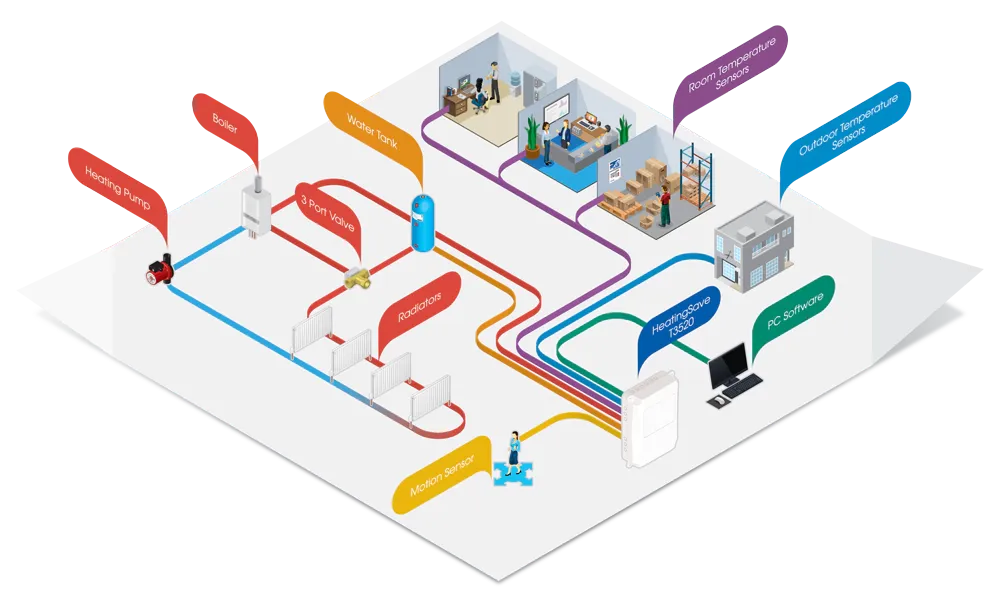
Key components of a BEMS

BEMS Component

Purpose

Sensors

Measure various conditions, temperatures, and occupancy across the building or site. 

Actuators 

Physically adjust valves, pumps, electric heating sources and other equipment. 

Controllers

Process information and operate connected equipment. 

Meters

Measure electricity, gas, oil, water and other energy consumption.

Software

Collects and processes data.

User interface

Allows users to monitor and manage building systems.

Key functions of a BEMS

A Building Energy Management System typically provides four core functions: 

  • Monitors energy use: Tracks a building's energy sources in real time, providing visibility of how and when these are being used.  
  • Identifies opportunities to improve efficiency: Collects and analyses key performance data to highlight inefficiencies, reduce unnecessary consumption and minimise energy waste. 
  • Automates building services: Controls and manages heating, cooling and lighting according to programmed schedules and conditions.  
  • Provides performance data: Produces detailed reports to support energy audits, performance monitoring and emissions compliance. 

How does a Building Energy Management System work?

A Building Energy Management System works by continuously collecting data from sensors and connected equipment. It then feeds that data into the BEMS software, which compares the collected information against programmed schedules and settings, automatically adjusting settings for connected building systems or alerting staff when abnormalities appear. 

Monitoring building conditions 

Sensors read and gather information from multiple sources to monitor overall building conditions. This information includes temperatures, air quality, living conditions and energy and utility data.  Different manufacturers offer different functionality and integrated equipment, so be sure to make a list of the required functions and compare systems.

  • Temperature data: Room sensors measure ambient temperatures throughout the building, whilst a weather-proof sensor placed on an outer wall measures the temperature outside. Boiler flow and return temperatures are measured using probe sensors, tie-wrapped onto boiler pipes. Probe sensors for hot water cylinders and wall surface sensors are also used when required. 
  • Air quality: Relative Humidity (RH) and Carbon Dioxide (CO2) sensors measure and record data on air quality across the site/building. BEMS manufacturers may also use Volatile Organic Compounds (VOC) sensors.
  • Living conditions: Occupancy, light and sound level sensors measure the general environment throughout the building, whilst heat-flux sensors measure the U value (amount of heat lost) at various points within the building fabric. 
  • Energy and utility data: Sensors, for example pulse counting sensors, accurately measure electricity, gas, oil, and water usage minute-by-minute.

The Building Energy Management System analyses the data it collects to identify inefficiencies, trends, unusual patterns and faults. It converts energy and utility information into kilowatt-hours (kWh) and calculates the notional CO2 emissions for each of the fuel sources. It also compares real-time conditions with historical data and benchmarks to highlight changes in performance, such as variations in a room's heat-loss profile.  

Data can be normalised to account for factors that naturally affect energy use. For heating, this includes degree-day analysis, which takes outdoor temperature into account when assessing energy consumption and comparing performance over different periods. 

Regression analysis can also be used to compare energy consumption with other variables, helping to identify trends, anomalies or unexpected changes. The specific criteria used will depend on how a building is operated and occupied. 

Automatically adjusting and controlling systems 

A Building Energy Management System uses the data it collects and its analysis to automatically adjust heating and cooling systems in response to factors such as occupancy, outdoor and indoor temperatures, and the building's current demand. This allows energy to be supplied when it is needed, while reducing unnecessary heating/cooling when demand is lower.  

Different BEMS manufacturers incorporate different functions to best manage systems through their products, so ensure your chosen BEMS can deliver the key features you need. Here are some of the features you may wish to discuss with your BEMS provider: 

  • Adjust heating according to demand: Heat-loss algorithms can manage multiple heating zones, starting the heating as late as possible and switching it off early where appropriate to reduce energy consumption. 
  • Respond to occupancy: Automatic occupancy detection can reduce temperatures in variably occupied rooms to a background level when unused then bring them back up to the required temperature when occupied.  
  • Manage room bookings: Heating can be scheduled around room bookings, so that spaces are only heated when required. Integration with third-party booking platforms makes this easier to manage.  
  • Respond to outdoor conditions: Outside temperature compensation and climate control can automatically adjust heating according to changes in the weather. 
  • Optimise boiler operation: Sequencing and demand management can coordinate multiple boilers according to heating demand and help prevent inefficient dry cycling. 
  • Adjust temperatures overnight: Night setback can reduce heating by a few degrees outside normal operating hours while maintaining a suitable background temperature. 
  • Protect against frost efficiently: Before generating additional heat and wasting energy, the BEMS can use residual heat within the heating system for frost protection, preventing the water in boilers and pipes from freezing.

Reporting and alerting 

A BEMS can present the information it collects through dashboards, reports and alerts. Building managers can use this information to monitor energy performance, identify unusual consumption and investigate potential faults. Alerts can also notify users when temperatures, equipment or energy use fall outside expected parameters. 

What can a Building Energy Management System control?

Building system

What a BEMS can control

Heating

Boilers, radiators, underfloor heating, air source heat pumps, ground source heat pumps, electric heaters and destratification fans.

Cooling

Air conditioning and other cooling systems.

Ventilation

Fans and electric windows.

Hot water

Hot water cylinders, immersion heaters, hot water tanks, combi boilers, circulation pumps and associated valves.

Lighting

Internal and external lighting, including use based on schedules, occupancy or other building conditions.

Access

Smartcards, key fobs and automatically generated PIN codes.

Electrical appliances

Switch connected appliances on and off.

What are the benefits of a Building Energy Management System? 

Reduce unnecessary energy consumption 

The main benefit of a Building Energy Management system is that it reduces energy consumption by ensuring building services operate only when and where they are needed, while still maintaining comfortable conditions for occupants.  

By automatically adjusting heating, cooling and lighting systems according to factors such as occupancy, schedules, external temperatures and demand, a BEMS can reduce energy wasted on empty or variably used spaces. This can be particularly valuable in buildings where the heating is left running regardless of occupancy. 

Reduce energy costs 

Reducing energy consumption can also help lower energy costs, as using less electricity, gas, or oil means less energy needs to be purchased. However, the financial savings achieved will vary depending on factors such as energy prices, tariffs, building usage and the energy efficiency of the building before installing a Building Energy Management System. 

A BEMS can also combine energy consumption data with tariff information or oil costs to give a clearer picture of overall energy costs. This can help organisations understand how changes in consumption affect their bills and identify opportunities to further reduce costs. 

It's worth noting that energy costs will also be affected by wider market conditions and political events, making it difficult to predict exactly how much a reduction in energy consumption will save a business.  

Improve comfort 

Through enhanced control over heating and cooling systems, Building Energy Management Systems provide the opportunity for improved comfort for building occupants. By monitoring conditions and automatically adjusting temperatures according to occupancy, schedules and changing requirements, a BEMS can help maintain consistent temperatures throughout a building, while zonal control allows different areas to be heated or cooled according to individual requirements. 

Automate energy management 

A Building Energy Management System automates many aspects of energy management, reducing the need for staff to manually monitor and adjust building systems like heating and cooling. Once schedules and temperatures have been configured on initial setup, the system can respond automatically to changes in occupancy and environmental conditions.  

Identify faults and unusual energy use 

Through continuous monitoring and data comparison, a Building Energy Management System can notify building managers when unusual energy use or system conditions are detected. It can also play an important role in preventative maintenance by identifying system or device faults, so they can be investigated and resolved before they lead to unnecessary energy consumption or costly repairs. 

Manage multiple buildings from one platform 

A Building Energy Management System can allow organisations or facility management companies with multiple buildings or sites to monitor and manage their energy use and building systems from a single platform. This provides a centralised view of building performance, while allowing individual sites, rooms and zones, to be managed according to their specific requirements. 

A BEMS can also be expanded as an organisation grows, allowing additional buildings and their systems to be added without needing a separate management platform. Centralised monitoring makes it easier to compare energy performance between sites, and gives a true overview of energy costs. 

How much energy can a Building Energy Management System save? 

The amount of energy a BEMS can save varies significantly between buildings, depending on several factors.  

Buildings that are already highly energy efficient may not see as significant savings as a building without any current energy efficiency measures. However, installing a BEMS alongside other energy efficiency measures such as good quality cavity and loft insulation and secondary glazing will likely yield greater results. 

Research published in the Energies journal (https://doi.org/10.3390/en18246522), drawing on 89 peer-reviewed studies published between 2019 and 2025, found that Building Energy Management Systems using hybrid AI—IoT solutions consistently deliver measurable energy savings from 20% to 40%, particularly within HVAC optimization, predictive maintenance, occupancy-driven automation, and anomaly detection. 

Different BEMS manufacturers claim savings of between 10-85% on specific projects, so make sure to check the circumstances of the installation and site to understand the factors involved. You should also make sure to talk to the providers and receive a personalised quote and/or site survey to ensure you are receiving an accurate savings figure. 

What affects BEMS energy savings?

Factor

Why it matters

Existing controls 

Poorly controlled systems generally have more scope for improvement.

Building type and construction

Insulation, glazing and building fabric affect heat loss.

Heating system

Different systems and fuel types have different control requirements and efficiencies.

Occupancy 

Variable occupancy creates opportunities for automated control.

Existing energy efficiency measures

Efficient buildings have fewer opportunities to reduce energy use.

Number of systems controlled

A BEMS managing heating, lighting and other systems can address more sources of energy use.

User management

Effective configuration and ongoing management are important.

Location and weather

Buildings in colder and windier areas will often use more energy than those that experience milder weather.

How much does a Building Energy Management System cost? 

The cost of a Building Energy Management system can vary depending on the size and requirements of the building, so there is no standard price for a BEMS installation.  

What affects BEMS installation costs? 

Installation costs are influenced by the size and complexity of the building, as well as the number of systems that need to be monitored and controlled. A smaller building with a straightforward heating system will generally require a different installation from a large, multi-zone building with multiple boilers and HVAC systems. 

Factors include: 

  • Building size and number of zones: Larger or more complex buildings may require more sensors and therefore more controllers to ensure each area can be monitored and controlled efficiently. 
  • Existing heating and other building systems: The type, age and compatibility of existing equipment can affect installation requirements.  
  • Number of sensors: The number and type of sensors required will depend on the building and the conditions that need to be monitored.
  • Number of buildings: Multi-site installations will require additional equipment and configuration in the first instance.  
  • Required functionality: Extra features such as third-party room booking platform integration can affect the scope of an installation. 

Can a BEMS be used in a small building? 

Building Energy Management Systems are suitable for all types of small buildings, where better control of heating and energy use can reduce waste and potentially lower costs. The appropriate solution depends on specific requirements rather than a building's size.  

Smaller buildings such as shops or boutiques, village halls, churches or small offices can all benefit from automated heating schedules, room or zone-based control and remote monitoring and control.  

How is a Building Energy Management System installed?

How is a BEMS installed?

Installing a Building Energy Management System typically begins with assessing the building and its existing HVAC systems and the requirements of the occupants to determine the appropriate controls, sensors and zoning. The installation process can vary depending on the size and complexity of the building, the level of control required and also whether the building needs to remain occupied throughout. 

  1. Initial consultation: Establish the building's energy management requirements, existing systems and any future considerations. 
  2. Site survey: Assess the building, its systems, floor plans and potential sensor locations to determine the most effective design. 
  3. System design: Specify the required sensors and number of controllers and zones based on the building's requirements. 
  4. Installation: Install the BEMS hardware and connect it to the relevant heating, cooling and other building services and systems, requiring access to plant rooms, boilers and other equipment.  
  5. Configuration and commissioning: Programme schedules, temperatures and control settings, then test the system to ensure it operates as intended.  
  6. Training and handover: Provide users with the knowledge needed to monitor and manage the system.  

A site survey is an important part of the process, as it allows the installer to identify the building's specific requirements rather than relying solely on standard configurations. Building Energy Management System providers may offer a free survey, consultation and quote to assess a building before installation. 

What buildings can use a Building Energy Management System?

Building Type

How a BEMS can be used 

Control heating, cooling and lighting around working hours, occupancy and individual zones.

Schedule heating around lessons, term times, holidays and different areas of the site.

Manage heating according to opening hours, occupancy and different areas of the building.

Control heating and ventilation around working patterns, production areas and occupancy.

Maintain appropriate temperatures while managing heating, ventilation and hot water across different areas. 

Heat rooms around bookings and events rather than maintaining temperatures when buildings are unoccupied. 

Manage heating and hot water around guest occupancy, opening hours and different areas of the premises.

Leisure and entertainment

Control heating and ventilation according to opening hours, bookings, occupancy and individual spaces. 

Museums and galleries 

Manage environmental conditions across different areas while controlling energy use. 

Maintain suitable conditions for buildings that may need to operate 24/7 while managing energy use efficiently.

Can a BEMS be installed in an existing building? 

A Building Energy Management System can often be installed in an existing building and integrated with existing heating, cooling and other building services, but this does depend on individual manufacturers. A BEMS does not necessarily require existing equipment to be replaced, as the system can be designed around the building's current systems and the level of control required. 

Before installation, the building and its existing systems should be assessed to determine what equipment can be connected to the BEMS and what sensors, controllers and other hardware are required. This allows the system to be designed around the building's specific requirements rather than relying on a standard configuration. 

What should you look for when choosing a Building Energy Management System? 

When it comes to choosing a Building Energy Management System there are several factors to consider, including scalability, reliability, ease of use, functionality and cost. The right system should meet your current requirements, while being flexible enough to adapt as your requirements change.   

Scalability 

Choose a BEMS that can scale as your organisation or building does. You may need to add new zones, sensors, buildings or systems in the future, so whichever BEMS you choose should be able to accommodate these changes without requiring a whole new system. 

Compatibility with existing systems 

A BEMS should be compatible with your existing heating, cooling and other building services wherever possible. Integrating with existing equipment can help reduce the need for unnecessary replacements and allow you to make better use of the systems already installed. 

Ease of use 

A BEMS should provide clear, accessible information in multiple formats that building managers can understand and act on if needed. An intuitive interface makes it easier to monitor energy use, adjust settings and manage schedules without requiring specialist knowledge. 

User comfort

A BEMS should not only provide improved energy efficiency, it should also give occupants greater comfort. Better control and management of heating systems will help to keep occupants at a comfortable temperature, without overheating or getting too cold. 

Modern technology

The utilisation of up-to-date technological advances will ensure your chosen BEMS will provide the optimal experience, and also allow it to integrate with new technologies and features — such as those found on smart devices and AI-powered algorithms. 

Support and aftercare 

Installation should only be part of the decision, and training and technical support shouldn't be an afterthought. Good aftercare should include appropriate user training and access to technical support when required. This can help building managers get the most from their BEMS and resolve issues without unnecessary disruption. 

Cost 

The initial cost of a BEMS should be considered alongside its functionality, installation requirements and potential to reduce energy consumption. A lower-cost or smaller system may not provide the level of control required, while a more comprehensive system may offer greater value over its lifetime.  

However, the most expensive or feature-rich system isn't necessarily the right choice. Choose a BEMS that provides the features and level of control your building needs, as paying for functionality you won't use can add unnecessary cost.

How does a Building Energy Management System support Net Zero? 

Building Energy Management Systems can support Net Zero strategies by reducing unnecessary energy consumption and improving energy efficiency of building services, which in turn can also help to reduce associated carbon emissions. 

By limiting energy used and using the heating system and other electrical equipment and appliances more energy efficiently, a BEMS cuts carbon emissions and reduces the environmental impact of a building or site. For older and poorly controlled heating systems, the installation of a Building Energy Management System can produce significant energy savings, especially when combined with additional energy efficiency measures (such as insulation and secondary glazing).  

Part of Net Zero and sustainability targets includes the setting of a benchmark to track how much energy is being saved through the introduction of energy-saving measures. Through its array of sensors, a BEMS can accurately record and calculate how much energy is being used and provide detailed reports to clearly show improvements over time. 

A good Building Energy Management System can also clearly determine and indicate the different sources of energy being used if more than one is available, such as solar panels or heat pumps. This allows a user to quickly and easily see how much of their energy is derived from sustainable sources and monitor changes and improvements, giving the option for more detailed benchmarking for sustainability goals. 

Real-world applications of a Building Energy Management Systems

The benefits of a Building Energy Management System are best demonstrated through real-world applications.

A review of BEMS installations in World Journal of Advanced Research and Reviews (https://doi.org/10.30574/wjarr.2024.21.3.0746) highlights several case studies worldwide where savings ranged from 15-38%. 

HeatingSave's case studies show how BEMS technology has been used to reduce energy consumption, improve control and provide detailed data across a range of different buildings and applications. 

Reducing energy costs and consumption 

AH Garner is a hydraulic cylinder manufacturer with site area totalling 30,000 sq ft across its main factory and two other leased units. The company wanted to reduce its heating costs and carbon footprint. 

Before installing a HeatingSave Building Energy Management System, AH Garner was typically spending more than £20,000 on heating, with annual costs later averaging £23,000. During its first full winter with the BEMS installed, their gas bill fell. 

Marek Lewandowski, Managing Director at AH Garner said: 

"The first full winter with the HeatingSave Building Energy Management System installed, our gas bill dropped down to £12,500, which means we saved around 45% on our heating and gas bills." 

The Building Energy Management System also gave the company greater visibility and control over its heating system. Before installation, there was limited control over who could adjust the heating, when it operated and the temperature it was set to. The system now allows the team to monitor and manage the heating in real time. 

"The fact we can see what's going on in real time on our screens is amazing. Prior to installing the HeatingSave Building Energy Management System, we had no control over who could turn the heating up, when it was on or the temperature it was set at. Now we have total control over our heating system." 

Managing heating across multiple buildings 

Forest Holidays needed a way to manage temperatures across its holiday cabins from a central location, while also improving energy efficiency. At its Cheshire site, the company has 66 cabins, making individual thermostats difficult and expensive to manage.

Construction Manager Dave Coster explained: 

"HeatingSave allows us to centrally regulate cabin temperatures in each room. It also prevents guests from tampering with the heating controls and leaving the heating at a high temperature when they leave." 

Collecting detailed building performance data 

A study run by the Sir Joseph Swan Centre for Energy Research used a HeatingSave BEMS to monitor a test property as part of their research into thermal comfort and energy usage. 

The system provided integrated data from sensors monitoring energy consumption and environmental conditions, including temperature, humidity and CO2. Dr Mohammad Royapoor of the SWAN Centre highlighted the accessibility and consolidation of this data as a particular strength of the system: 

"Other competitor products can monitor either energy consumption or various environmental parameters (temperature, humidity, CO2, etc.). HeatingSave monitors all of them and delivers the data in a very consistent, consolidated manner. This, I think, is the system's main strength." 

He also highlighted the ability to access the system remotely, allowing the required data to be accessed easily for analysis. 

"HeatingSave offers a single access point for the whole solution, which makes it highly intuitive. The remote access feature also makes it very easy to access the required data for analysis." 

These examples demonstrate how a BEMS can be used for different purposes, from reducing energy consumption and improving heating control to collecting detailed data for monitoring and research. 

Building Energy Management Systems: The Key Points 

A BEMS provides centralised monitoring and control of a building's energy-using systems, helping organisations understand how their buildings use energy and automate systems such as heating, cooling and lighting. 

The potential benefits depend on the building, its existing systems and how effectively the BEMS is configured and managed. For buildings with inefficient or poorly controlled systems, improving automation and control can provide significant opportunities to reduce unnecessary energy consumption and costs. 

This guide aims to give you the fullest representation of what a BEMS can do, but not all providers offer the same features, so make sure to research what your system needs — and what it might need in future.   

If you're considering a BEMS for your building, a site survey can help determine what level of control and monitoring would be most appropriate. This will give you the opportunity to discuss your options and choose the Building Energy Management System that will give your building the greatest benefit. 

If you'd like to discuss your options with HeatingSave, please do get in touch and our experienced BEMS specialists will be able to help.